










Fortaleza de MalacaWelcome to Malacca World Heritage City. On this site youwill find comprehensive listing with information on almost every aspect of visiting and living in Malacca. |
|
|||||||||||
Malacca Tourism· Chinese temples· Cheng Hoon Teng Temple · Hindu temples · Comming soon · Churches · Christ Church · St. Francis Xavier's Church · St. Paul's church · Mosques · Comming soon · Museums · Cheng Ho Cultural Museum · Governor's Museum · Malaysia Youth Museum · Maritime Museum · Melaka Islamic Museum · Melaka Umno Museum · Museum of Architecture · Museum of History and Ethnography · Heritage Sites · 8 Heeren Street · Bastion House · Dutch Graveyard · Dutch Square · Fortaleza de Malaca · Hang Jebat Mausoleum · Malacca River · Porta de Santiago · Proclamation of Independence Memorial · Stadthuys · St. Paul's Church · Tan Kim Seng Bridge · Malacca clan associations · Eng Choon Association · Melaka Hainan Association · Street names · Blacksmith Street / Jalan Tukang Besi · Church Street / Jalan Gereja · Fort Road / Jalan Kota · Jonker Street / Jalan Hang Jebat · Jonker Walk (Night Market) · Riverside / Jalan Laksamana · Temple Street / Jalan Tokong |
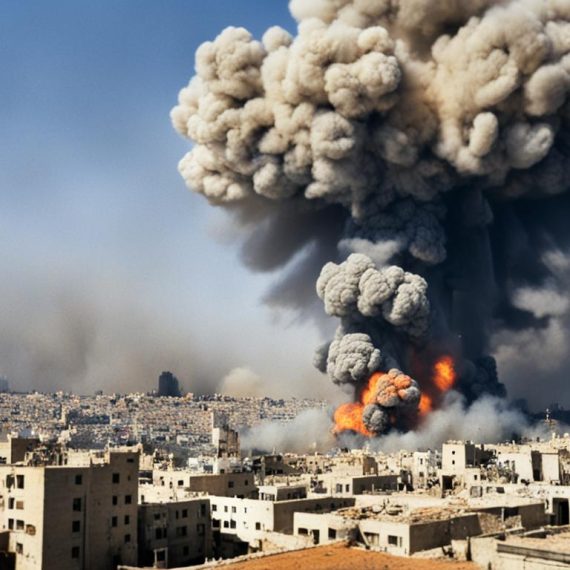
Chinese templesFortaleza de Malaca is the name of the Portuguese fort in Malacca. The name simply translate as Malacca Fort. This is the fortress that was first built by the Portuguese in the early 16th century, and from which Jalan Kota (translated from Fort Road) derives its name.Immediately after they defeated the Malays, the Portuguese put up a makeshift citadel to defend their newly acquired territory. That citadel was called A Famosa. According to local historians, A Famosa was located near the bend of Jalan Kota under the car park beside Stadthuys. Improved historical documentation of Malacca history now requires us to differentiate A Famosa from Porta de Santiago, which history books of the past decades have erroneously called A Famosa. But now we know better, as the name applies to a different structure. Just as A Famosa was built, work began on a more robust structure to fortify the Portuguese position in Malacca. It was to be a fortress encircling Malacca Hill. To built it, the Portuguese plundered Malay graves, demolished mosques and other buildings for their stones. This fortification was called Fortaleza de Malaca. It had four towers, or bastions, and walls that were 2.4 metres thick. The towers were called Baluarte San Pedro, Baluerte de las Virgenes, Baluerte Madre de Dios, Baluerte Santo Domingo, and Baluerte de Santiago. By 1583, Malacca had become a fortified city protected by seventy canons aimed in all directions. The fortress was so well built that it helped the Portuguese ward off all forms of attacks. In order to capture Malacca, the Dutch laid siege around the fortress for five months, while its citizen, trapped inside, were reduced to eating cats, rats, and there was a case of a women eating her dead infant. Finally, on 14 January 1641, the Dutch stormed into the fort through the Santo Domingo Gate, by which time, the casulty totalled over 7,000, from the famine, disease and gunfire. Upon capturing the fortress, the Dutch repaired and renovated it, and placed their coat of arms above the gates. This can still be seen today at Porta de Santiago, the remaining gate, with the inscription "Anno 1670". When Napoleon's army invaded Holland in 1795, Prince William of Orange fled to London, where he commanded all Dutch settlements to admit British troops, to prevent them from falling into the hands of the French. As a result, the British was able to enter Malacca without fighting for it. Upon receiving Malacca, the British was not keen to keep it, nor do they want to spare their troops to defend Malacca. Leaving such a formidable fortress without proper defence would be a liability, if it falls into the wrong hands. So they were not keen for Malacca to return to Dutch hands with such a strong fortress. They wanted to wipe Malacca off the map, and transfer its population to Penang. As for the fort, they considered it a liability, and wanted to have it demolished. Governor William Farquhar, who was Resident of Malacca from 1803 until 1818, was given the task to demolish the fortress. At first he ordered convict labourers to dismantle the fortress stone by stone, with pickaxes and crowbars. When the walls - some parts of it reaching 4.5 metres thick - seem too formidable, he decided on a more explosive plan. He planted boxes of gunpowder around the foot of the fortress. When the gunpowder exploded, it sent pieces of the fort, some as big as boulders careening into the sky and dropping into the sea. The demolition was already in an advanced stage when a young British civil servant in Penang arrived in Malacca on sick leave. He was Thomas Stamford Raffles. Upon learning about the demolition, he wrote a report persuading his superiors to keep the fort. According to Raffles, keeping Malacca carries more prestige in the eyes of the natives, than holding on to a new settlement like Penang. He argued that, considering they already have a cleared piece of valuable property, namely Malacca, why should they give it up unless forced. His argument help save the remaining piece of the fortress, which is the Porta de Santiago. The British remained in Malacca until 1818. With the end of the Napoleonic wars, they returned it to the Dutch. It remained in Dutch hands for another seven years, until the 1824 London agreement, when they swap it for Bencoolen in Sumatra. Previous | Home |
|||||||||||
|
2009 © VMi / MalaccaGuide.com - All Rights Reserved. Terms and Conditions | Contact Us | Sitemap Advertise with us | Resources |
We recommend the following site(s): · The Dutch in Malaysia: Dutchmalaysia.net · Malacca on Wikipedia: Wikipedia.org |
|||||||||||